Inspect and diagnose.
kingai version
kingai status --json
kingai doctor --json
KINGAI OS combines familiar Linux development with a governed local intelligence runtime. The public source already includes a CLI, local daemon services, policy/approval/task/memory/model foundations, build paths and release gates. Interfaces are still pre-alpha and may change.
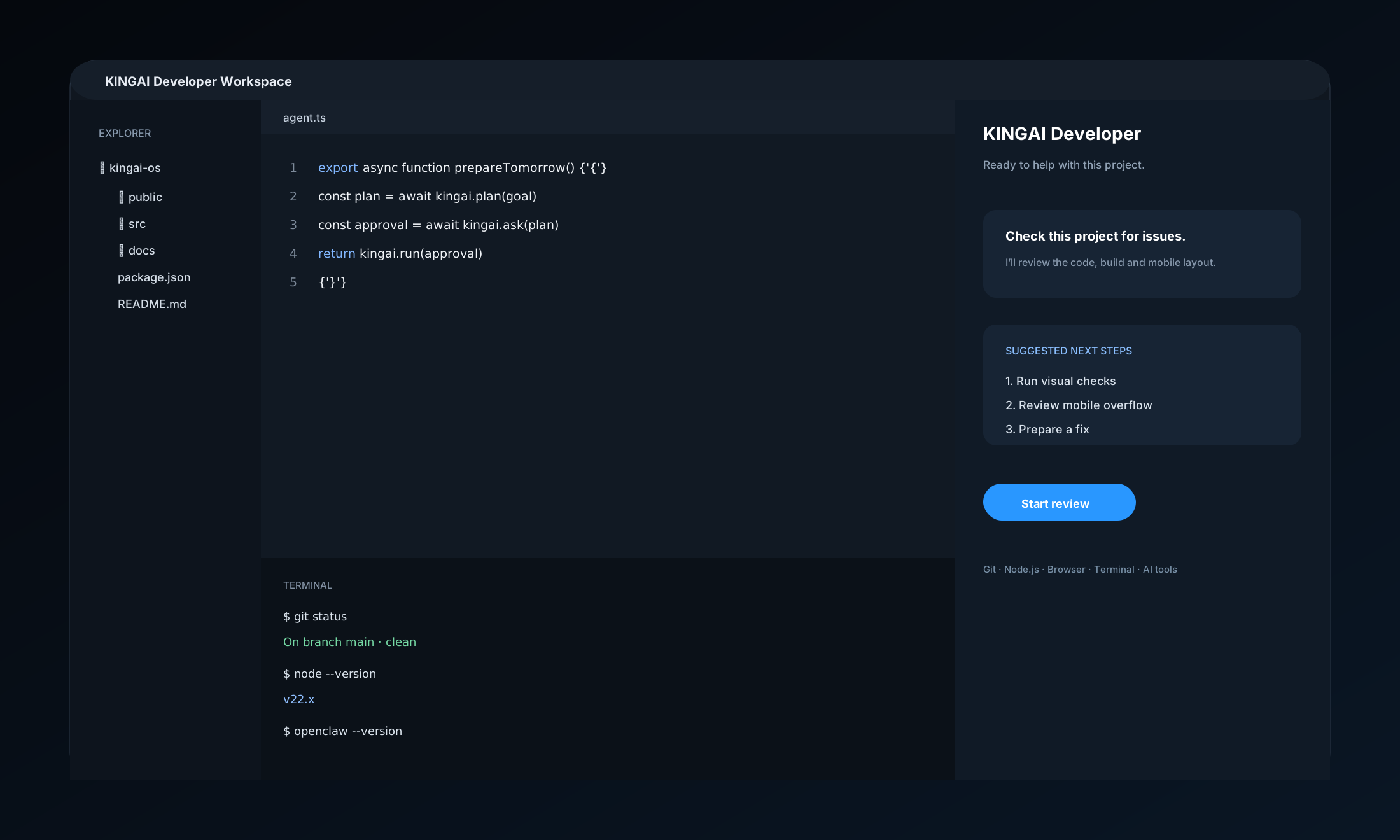
The current developer CLI exposes system health, policy, approvals, memory, models, tasks and Desktop mode controls. These are pre-alpha interfaces, not a frozen public SDK contract.
kingai version kingai status --json kingai doctor --json
kingai policy check filesystem.read
kingai approval list
kingai approval request main filesystem.write ./project
kingai memory list
kingai task list
kingai desktop show
The current kingaid runtime uses a local Unix socket rather than exposing a management TCP listener by default. Current services include health/status, Agent Registry, capability-policy evaluation, Approval Broker, local Memory, Model Router, Task Graph and Audit.
Local peer identity can be tied to Unix credentials, while privileged decisions remain separate from ordinary client requests. The project is building an execution path where capability and owner approval matter before higher-risk actions.
The repository documents core checks and edition-specific image builds. Use current repository documentation as the source of truth for dependencies and release gates.
make check
make build
sudo bash scripts/build-rootfs.sh desktop amd64 dist
sudo bash scripts/build-live-iso.sh desktop dist
docker build -f container/Dockerfile \
  -t kingai-os:dev .
Runtime layers, governance direction, editions and system boundaries.
Separate implemented and validated foundations from planned production-complete capability.
Capability policy, approvals, local identity, audit and the constrained-execution direction.
No. The current line is D5 Pre-Alpha. CLI and local runtime services are real engineering surfaces, but compatibility is not yet frozen for third-party production integrations.
The current runtime management direction is local Unix-socket first. The website does not advertise a hosted REST API that the source does not currently guarantee.
Yes. The public repository documents make check/make build and edition-specific build paths. Hardware and release validation still determine which artifacts are officially supported.
That is specifically what the governance direction is intended to avoid. The current runtime separates capability policy and owner approvals; the final constrained privileged Execution Broker remains an active development milestone.
Inspect current code and status, then join Early Access if you want future Desktop and developer-platform testing invitations.